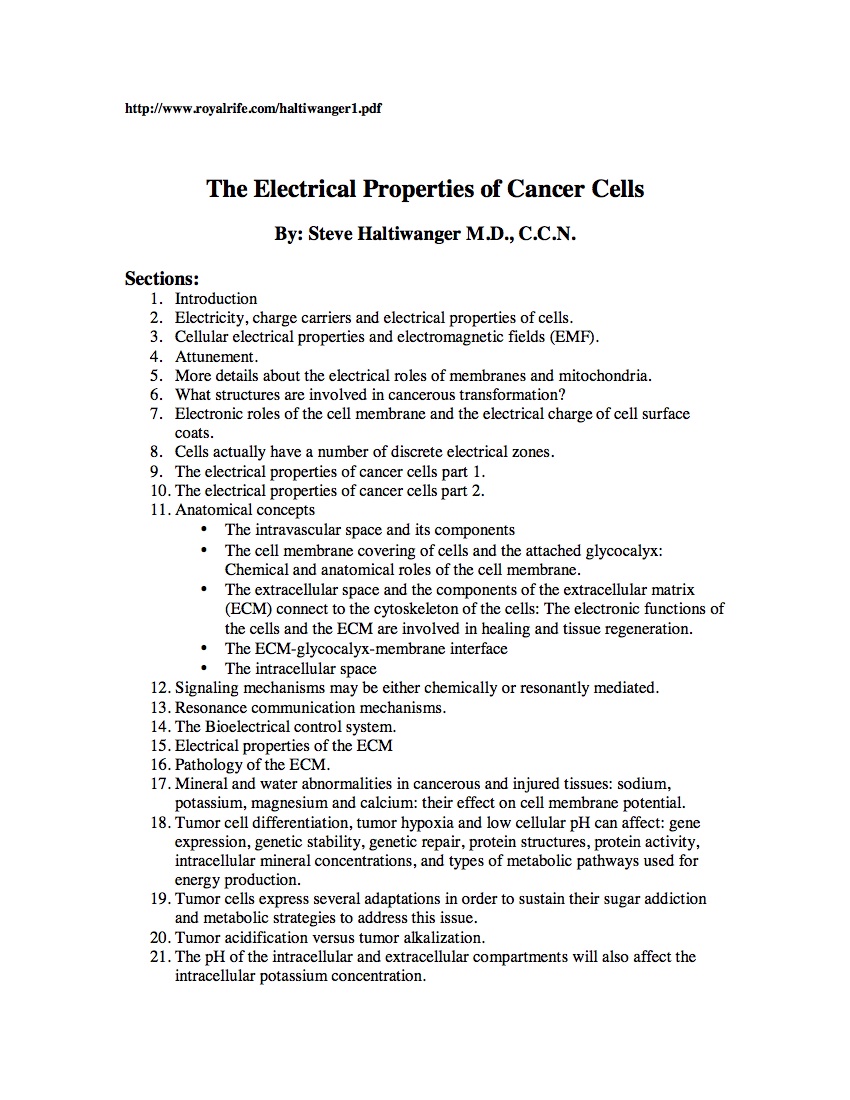

Sections: 1. lntroduction 2. Electricity, charge carriers and electrical properties of cells. 3. Cellular electrical properties and electromagnetic fields (EMF). 4. Attunement. 5. More details about the electrical roles of membranes and mitochondria. 6. What structures are involved in cancerous transformation? 7. Electronic roles of the cell membrane and the electrical charge of cell surface coats. 8. Cells actually have a number of discrete electrical zones. 9. The electrical properties of cancer cells part l. 10. The electrical properties of cancer cells part 2. ll. Anatomical concepts The ìntravascular space and its components The cell membrane covering of cells and the attached glycocalyx: Chemical and anatomical roles of the cell membrane. The extracellular space and the components of the extracellular matrix (ECM) connect to the cytoskeleton of the cells: The electronic functions of the cells and the ECM are involved in healing and tissue regeneration. The ECM-glycocalyx-membrane interface The intracellular space 12. Signaling mechanisms may be either chemically or resonantly mediated. 13. Resonance communication mechanisms. 14. The Bioelectrical control system. 15. Electrical properties of the ECM 16. Pathology of the ECM. 17. Mineral and water abnormalities in cancerous and ìnjured tissues: sodium, potassium, magnesium and calcium: their effect on cell membrane potential. 18. Tumor cell differentiation, tumor hypoxia and low cellular pH can affect: gene expression, genetic stability, genetic repair, proteìn structures, protein activity, intracellular mineral concentrations, and types of metabolic pathways used for energy production. 19. Tumor cells express several adaptations in order to sustaìn their sugar addiction and metabolic strategies to address this issue. 20. Tumor acidìfication versus tumor alkalìzation. 21. The pH of the intracellular and extracellular compartments will also afi’ect the intracellular potassium concentration.